About Fire Audit
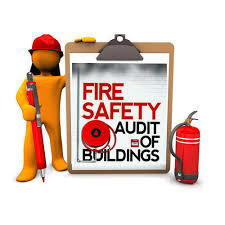
Fire Safety Audit
Objective:
- To carry out a systematic, critical appraisal of all potential Fire hazards involving personnel, premises, services & operation method
- To ensure that occupational Safety & Health System fully satisfy the legal requirements and those of companys written safety policies , objectives & progress
Scope of Work
Fire Hazard Identification
- Identifying potential fire / eexplosion hazards / risks in the Premises and suggesting appropriate preventive measures
- Evaluate the Fire risk in each operation / area.
Fire fighting system
- Evaluate the location of the Fire pump house and water storage tank to meet the Statute and standard requirements and the availability of nearby hazards.
- Adequacy of the underground and above ground fire water tank and pumping capacity, Availability of Overhead tank and its interconnection with Fire water network, and backup supply
- Configuration of the pumps and valves for the hydrant and sprinkler system
- Checking the Adequacy of the sprinkler system, detection system, operating temperature / other parameter
Fire detection and alarm system
- Adequacy of the Fire detection and alarm (FDA) system with respect to relevant standards, positioning of the detectors with respect to ventilation system, beam depth, obstructions, etc.
- Checking the availability and adequacy of the backup power supply to FDA panel and other electrically operated emergency equipments
- Type of cables used for emergency service.
Gas suppression system
- Assess the requirement of Gas suppression system based on fire risk and criticality of the equipments / operations as per relevant standards.
- Assessing the location of the Gas suppression cylinders, routing of pipeline, location of manual release and abort switches and panel, Standby power supply, etc.
Fire extinguisher
- Checking the adequacy and deployment of the portable Fire extinguisher as per relevant standards.
- Accessibility to extinguishers as per relevant standards and availability of refills, mounting practice, etc.
Passive fire protection
- Segregation of the facilities and utilities, requirement of fire partition walls and its fire rating
- Segregation of power cables and data cables and utilities lines
- Addressing the fire spread through vertical and horizontal openings meant for cable passes, utility lines, etc.
- Fire rating of the emergency exit doors, Fire lifts, etc.
- Fire rating of building construction, internal partitions and false ceilings.
Emergency Management & Life Safety System
- Availability of Emergency preparedness plan
- Adequacy of emergency exit based on occupant load / type of occupancy / type of exit
- Adequacy and availability of emergency lights and ventilation
- Segregation of the emergency exit from the remaining facility.
- Communication of emergency, Mutual Aid, etc.
- Approach road width and clearance.
- Access and egress to the building.
- Open space around the building.
- Adequacy of siganges.
- Assess the requirement of passive fire protection system like cable pass sealants, etc.
- Assessment of fire safety training level of security staff, and facility management staff.
- Assessment of emergency plan, fire mockup drill records, evacuation plan and its adequacy.
Thorough Manual Inspection & Risk AssessmentOur fire audit involves a meticulous manual inspection process tailored to your sites unique needs. Certified professionals assess fire risks, review compliance, inspect equipment, and evaluate emergency plans to ensure optimal safety. This hands-on approach guarantees comprehensive coverage for all areas, supporting legal compliance and best practices.
Detailed Reporting & Ongoing SupportFollowing each audit, a comprehensive report with actionable recommendations is provided. Checklists, photographs, and compliance records are compiled for your reference. Clients benefit from on-call consultation and post-audit guidance, ensuring that all queries are resolved and improvement plans are effectively implemented.
Rapid Turnaround Across Diverse ApplicationsOur service is designed for a wide range of facilities including warehouses, offices, hospitals, and schools. Audits are typically completed within 2-7 days, based on facility size. Service is available offline throughout India for dealers, distributors, retailers, service providers, and more, ensuring business continuity and peace of mind.
FAQs of Fire Audit:
Q: How is the fire audit conducted at my facility?
A: A certified fire safety professional will physically assess your premises using detailed checklists, taking photographs and reviewing compliance records. The inspection covers fire risk assessment, emergency planning, and equipment checks, resulting in a tailored report with improvement recommendations.
Q: What is included in the detailed audit report?
A: The report contains comprehensive findings on fire safety compliance, risks identified, photographic documentation, completed checklists, and practical recommendations for increasing safety and meeting statutory requirements at your site.
Q: When should fire audits be scheduled for my organization?
A: Fire audits should be performed annually or whenever significant changes occur in your facility, such as renovations, changes in occupancy, or after a fire incident. This ensures continued compliance and timely identification of new risks.
Q: Where can this fire audit service be applied?
A: Our service covers a diverse range of sites, including industrial premises, commercial buildings, residential complexes, warehouses, hospitals, and educational institutions across India. We can adapt our inspection to different facility types as required.
Q: What is the process from booking to receiving the report?
A: Once you schedule the audit, our experts visit your site for an on-site assessment. Data is collected manually and compiled into a detailed report, typically delivered within 2-7 days depending on the property size. Post-report, we offer guidance and answer further queries.
Q: How can my organization benefit from a fire audit?
A: A fire audit enhances your facilitys safety by identifying hidden fire hazards, advising on emergency protocols, ensuring equipment compliance, and improving readiness. It demonstrates proactive risk management to authorities, staff, and stakeholders.

 GST : 27AAEPB5677L1ZE

 Get Latest Price


 Send Inquiry

 Send Inquiry
 Send SMS
 Call Me Free


